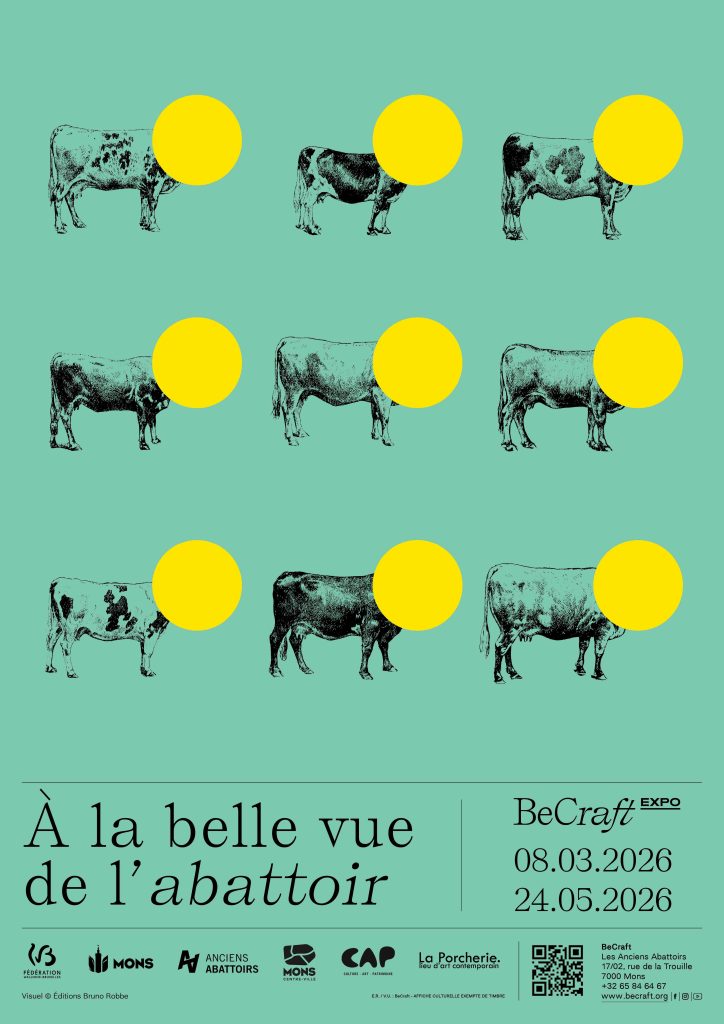
This European collective exhibition celebrates the association’s 20 years on the site and explores the imagination, history and contemporary issues surrounding slaughterhouses.
Whether through denunciation, memory, poetry or critical analysis, the works invite us to take a sensitive and informed look at these places of passage, abandonment, production, transformation and, to this day, heritage. The exhibition thus aims to open up a space for reflection on what slaughterhouses say about our societies: our relationship with living beings, with the acts of production, with traces, with disappearance.
The dialogue between the works, archival documents and life stories allows for a complete immersion into a theme rarely explored in the field of applied arts. It pays tribute to the power of craftsmanship in shaping our view of the world.
Catch, play, forget?
This former slaughterhouse, where an anonymous stream of animals met their end now houses a claw machine.
No more sounds of
metal hooks and heavy breathing, but the soft thud of an object to be won. A surprise wrapped in a playful way.
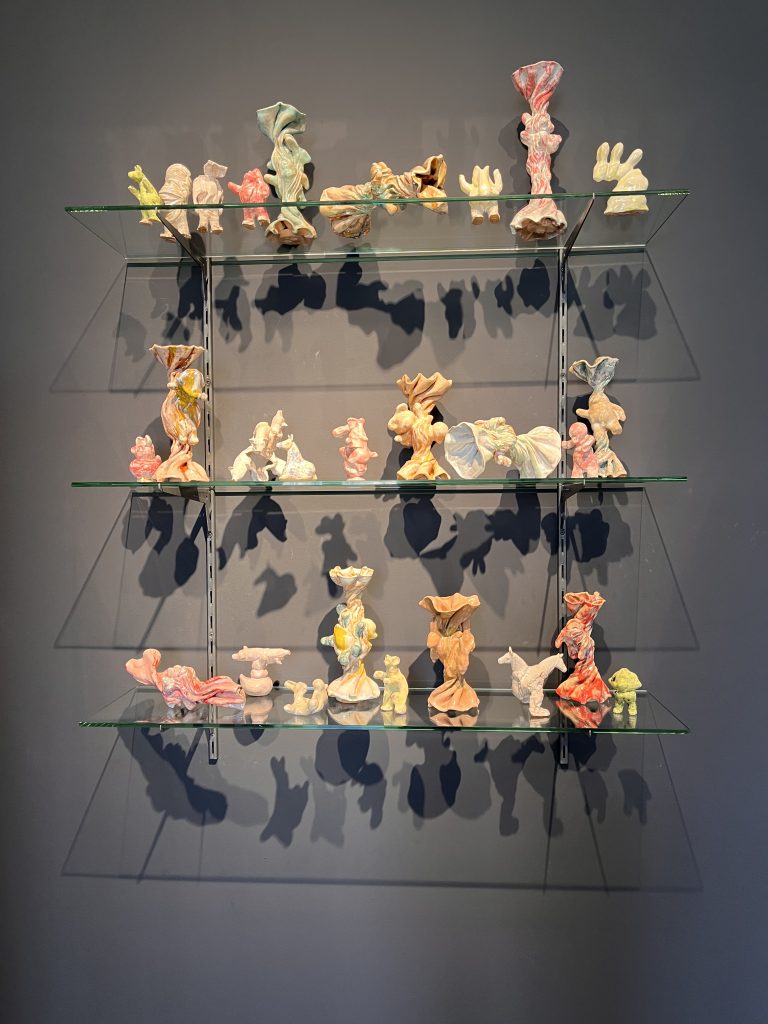
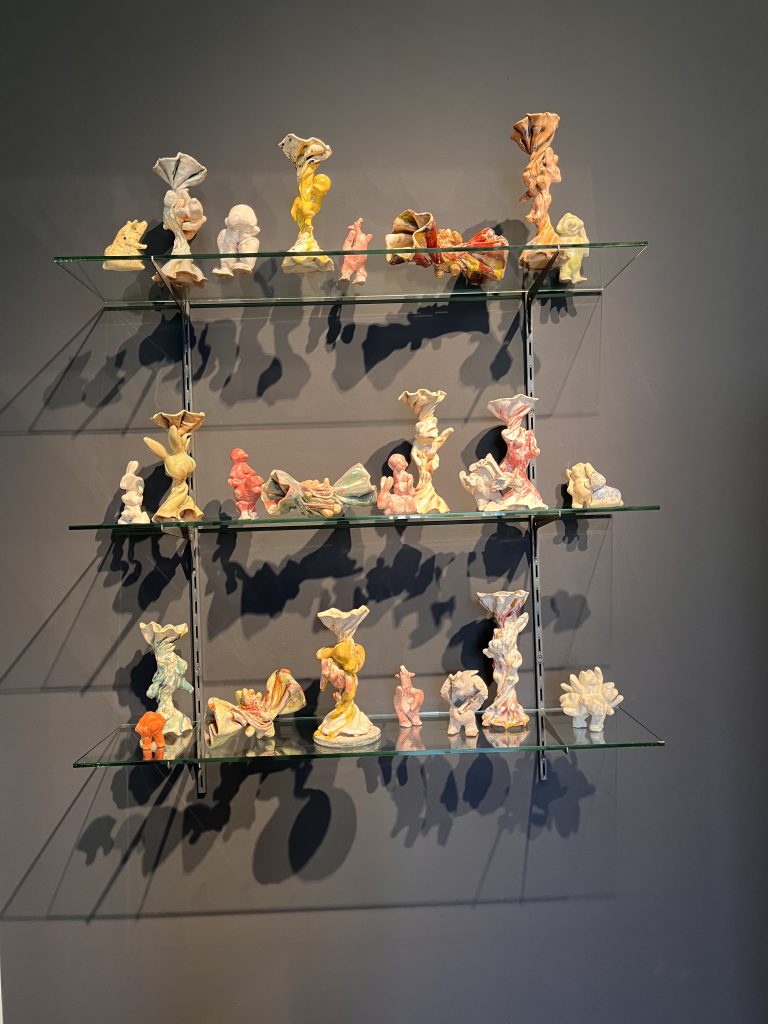
Here, you won’t find stuffed animals, but unique works of art, wrapped like sweets and steeped in history. A place with a past. This place exudes history. Where animals breathed their last breath, something new emerges: an art installation that plays on transformation, impermanence and rebirth. The smell of blood and steel has given way to colour and a certain sense of wonder.
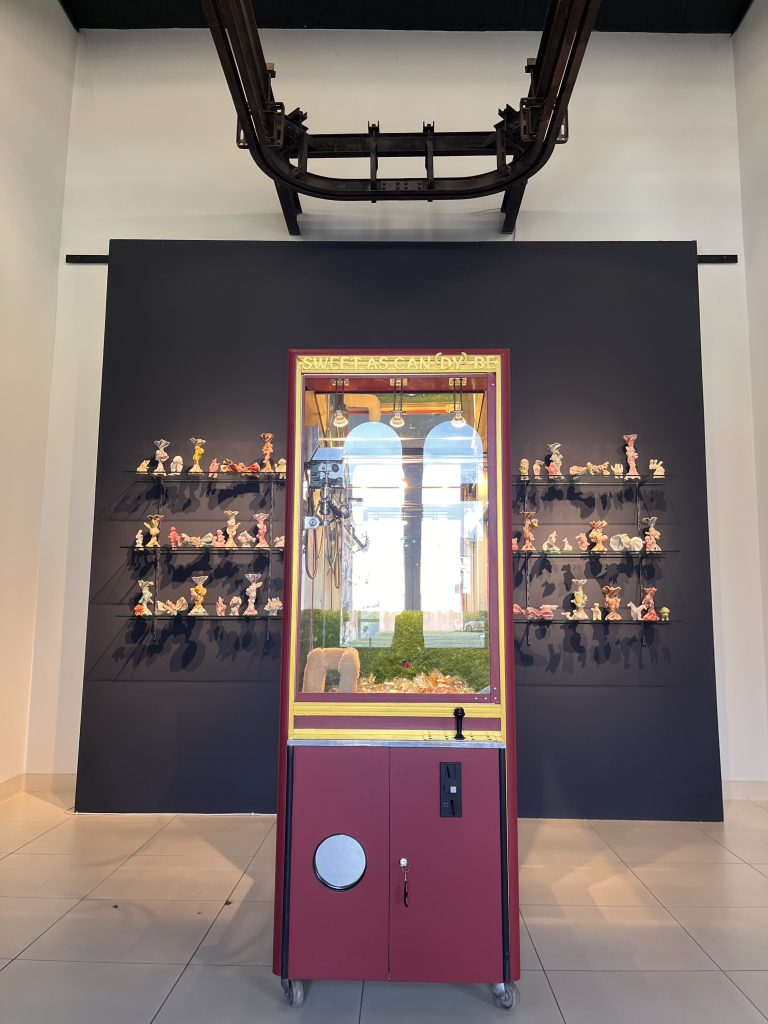
How does it work?
Let the claw machine do its job and discover what
awaits you. Each “package” contains a piece of art
made by hand (along with a QR code). Scan it and
immerse yourself in the stories behind this place. An
encounter with as sweet as can(dy)be, symbolizing both the
past and renewal.
Do you dare to take it?
The mascot as a mask.
[as sweet as can(dy)be] laughs, dances, draws you into the game.
But behind this playful façade lies something else.
A memory. A question. How do we view
animals? If we no longer eat them, do we consume them
differently?